Inspired Spine is a total spine care provider committed to treating back and neck pain with the least invasive approach that’s appropriate for your condition. We are raising the standard of care for the most complex conditions with our unique advanced minimally invasive spinal fusions—fluoroscopic surgeries that make your recovery faster and easier.
However, surgery is never the first choice for back pain treatment, and we will always take the most conservative approach to get you back to normal with non-surgical options. Inspired Spine’s Multi Dimensional Conservative Protocol ™ offers a wide range of non-invasive therapies and pain management services that may relieve your back pain without surgery. Physical Therapy (PT) is the most common conservative therapy, but even alternative treatments like yoga can be useful for some patients.
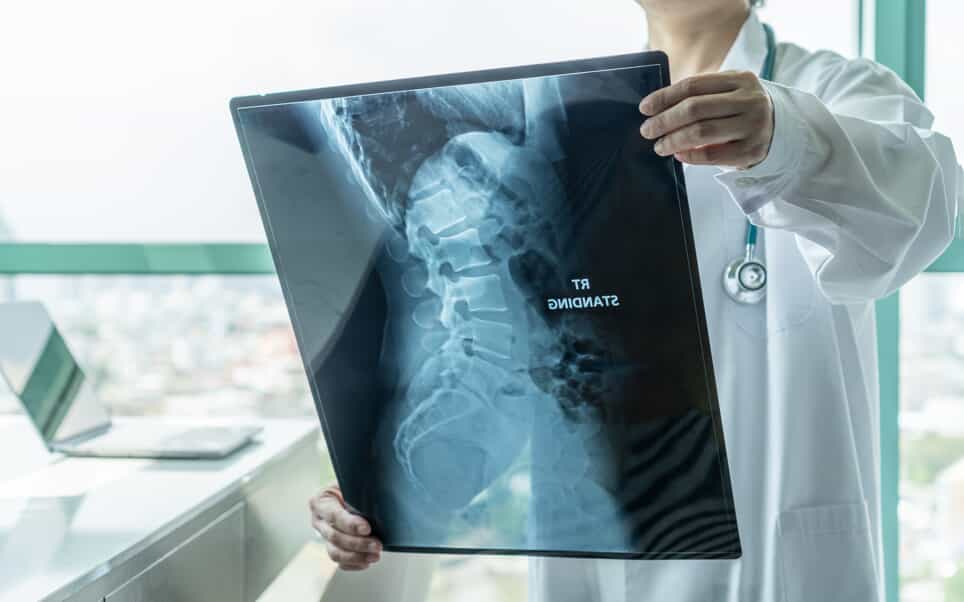
This age-related degenerative disease can be acquired in adulthood as a result of tumors, multiple sclerosis, or other problems. Symptoms include a vertebral rotation that pulls the spine laterally and causes it to deviate from a normal position to a lateral, S-shaped or C-shaped curvature. Symptoms include pain, especially lower-back pain and leg pain when standing or walking, as well as poor balance and electric-shock like pain in either or both legs.
Also called a slipped, prolapsed, or ruptured disc, a herniated disc occurs when the outer portion of a vertebral disc ruptures and its pulpy contents spill through the opening. This can irritate spinal nerves or compress the spinal cord. While any disc can herniate, the most common location is in the neck or lower back areas of the spine (cervical and lumbar spine, respectively).
This painful, sometimes disabling condition is typically caused by degenerative changes associated with osteoarthritis. There may be an overgrowth of bone and soft tissue that narrows the spinal canal and puts pressure on the spinal cord. Symptoms include pain which is aggravated by walking or standing and alleviated by sitting, flexing the back, or lying down. Surgical treatment may be needed to relieve pressure off the spinal cord and keep the disease from progressing.
The vertebral bones are vulnerable to a painful degenerative condition known as osteoarthritis. Because this form of arthritis affects the facet joints of the spine, the condition is sometimes called facet joint arthritis. The cervical, thoracic, and lumbar segments of the spine can all be affected with osteoarthritis. Spinal arthritis is degenerative, meaning it progressively gets worse without treatment. Symptoms include pain, stiffness, and muscle spasms in the neck or back.
Radiculopathy is a spinal cord disorder, and it occurs when one or more of the foramina nerve roots becomes compressed. Most often, the site of this compression is at the cervical or lumbar regions of the spine. Patients with radiculopathy have varying degrees of back pain that interferes with their quality of life. They may also have weakness, numbness, or a tingling sensation, diminished grip strength or reflexes, limited range of motion, loss of coordination, or pain in the neck, arm, hand, leg, or foot.
Your spine is formed and equipped to perform many essential activities. These include bearing the weight of the body, balancing and supporting the head, anchoring your ribs and legs, protecting the spinal cord, and more.
Back pain can have a domino effect on everything in your life. That’s because it’s hard to focus on much else when your back hurts and you’re always uncomfortable and cannot find relief. Your overall health may suffer because of avoiding activities that could intensify your pain, even simple activities like mowing the lawn or walking your dog.
Your spine is strong and resilient, just like you. In learning about your condition, you’ve already taken an important first step toward relieving your pain. Keep reading. Ask questions. Take notes. Make sure you understand all your options. Let your doctor know if what you’ve tried already hasn’t worked, and insist that together, you keep looking for a solution. Most importantly, take advantage of the support systems around you—family, friends, caregivers, neighbors, community services, and even insurance company or Medicare representatives. You might be surprised.
We treat spinal conditions with conservative, nonsurgical therapies whenever possible and only resort to surgery when absolutely necessary to alleviate pain, correct a deformity, or halt the progression of a degenerative spinal disorder.